


 English
 Español
Looking forward to your message
Our factory was established in 2006
-
 Mobile/Whats app/Wechat: +86-18761594570 ( Miss. Jenny Chen )
-
 E-mail: [email protected]
Is Shrink Film POF Packaging Film prone to cracking under high temperature conditions?
Content
- 1 Introduction: scope and why cracking matters
- 2 Material behavior: how POF responds to heat
- 3 Common causes of cracking under high-temperature conditions
- 4 Practical diagnostic checks and tests
- 5 Temperature settings and tunnel control: best practices
- 6 Mechanical adjustments and packaging design to reduce cracking
- 7 Material selection and supplier collaboration
- 8 Conclusion: is POF prone to cracking at high temperatures?
Introduction: scope and why cracking matters
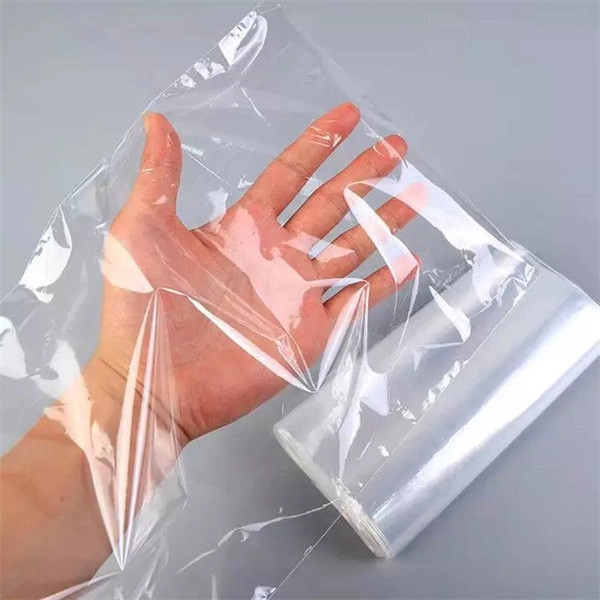
Polyolefin (POF) shrink film is widely used for retail multipacks, protective overwraps, and shrink-wrapping irregular shapes because of its clarity, toughness, and heat-shrink performance. However, under improper thermal conditions or mechanical stresses, POF film can develop cracks—visible fractures or craze lines that reduce package integrity and ruin appearance. This article focuses on whether POF film is prone to cracking at high temperatures, the mechanisms involved, diagnostic tests, and concrete measures that packaging engineers and line operators can use to prevent cracking while maintaining good shrink and throughput.
Material behavior: how POF responds to heat
POF film is a non-crosslinked polyolefin composition often based on polyethylene and propylene copolymers with additives for clarity, slip, and anti-block. Its shrink performance comes from molecular orientation introduced during production. When exposed to heat, oriented polymer chains relax and the film contracts. Controlled heating produces uniform shrink; excessive temperature or uneven heat causes local overstress and micro-tearing which appears as cracking. The film's thermal window—the range of temperatures where it shrinks safely—depends on formulation, thickness, and pre-orientation.
Key material properties that influence cracking risk
Tensile strength, elongation at break, melt index, and glass transition behavior determine film resiliency. Films with higher elongation and better tear resistance withstand rapid shrink cycles with less risk of cracking. Additives such as antioxidants and impact modifiers increase high-temperature durability, while poor-grade films or aged material lose elasticity and crack more easily.
Common causes of cracking under high-temperature conditions
Cracking is rarely caused by peak temperature alone; it usually results from the interaction of heat with mechanical or chemical stressors. Recognizing these combined factors enables effective prevention.
- Overheating: temperatures above the film’s recommended shrink window can degrade polymer chains, leading to embrittlement and crack formation.
- Rapid heating gradients: uneven or very fast heating creates local tensile stresses as some areas shrink faster than adjacent zones.
- Mechanical constraint: rigid or sharp edges on the product, corners, or tight packing can concentrate stress in the film during shrinkage.
- Old or improperly stored film: oxidation from long-term heat or UV exposure reduces flexibility and increases brittleness.
- Incompatible additives or contamination: residual processing aids, oil, or solvents on film or product surfaces can weaken the film at elevated temperature.
Practical diagnostic checks and tests
Before changing process parameters, perform a series of quick diagnostics to isolate whether cracking is thermal, mechanical, or material-related. These tests are practical on the production floor and provide evidence for corrective action.
Suggested on-line and lab checks
- Visual mapping: mark the area where cracking appears and inspect product geometry for sharp corners or protrusions that might stress film.
- Temperature profiling: use thermocouples or IR camera to map tunnel temperature uniformity across the conveyor width and length.
- Small-batch trial: test with a controlled sample using incremental temperature increases to locate the upper safe limit for that film batch.
- Film material check: verify film lot, manufacture date, and storage conditions; run tensile or elongation tests if possible.
Temperature settings and tunnel control: best practices
A stable tunnel profile is the first line of defense. Rather than cranking tunnel temperature to accelerate throughput, adjust conveyor speed, air flow pattern, and nozzle position to obtain uniform, moderate heating. Use the film supplier’s recommended shrink temperature range as a starting point and tune from there for actual product geometry and film thickness.
| Film Thickness | Typical Shrink Temp Range (°C) | Operator Focus |
| 15–20 µm | 110–130 | Avoid localized hot air; reduce dwell |
| 20–30 µm | 120–140 | Balance temp with conveyor speed |
| 30–40 µm | 130–150 | Monitor stress at sharp edges |
Note: temperature numbers vary by film supplier and formulation—use them as a starting guide and always validate with material-specific trials.
Mechanical adjustments and packaging design to reduce cracking
Reducing mechanical stress during shrink can eliminate many cracking issues. Use corner guards or rounded trays, increase film overlap at sharp edges, and avoid tight folds that concentrate strain. For irregular items, consider using film with higher elongation or add a secondary inner liner to cushion edges.
Line-level fixes
- Adjust nozzle angle and distance to promote even airflow rather than direct jets that overheat local spots.
- Tune conveyor speed to increase dwell time rather than raising temperature.
- Implement soft guides or rails to prevent lateral film rubbing that can thin the film before heating.
Material selection and supplier collaboration
Not all POF films are created equal. Work with suppliers to select grades formulated for higher-temperature windows or increased elongation for demanding geometries. Request technical data sheets, tensile and heat-aging data, and run acceptance trials on pilot lines. Long-term, specifying minimum mechanical properties and recommended tunnel parameters in purchasing contracts reduces lot-to-lot surprises.
Conclusion: is POF prone to cracking at high temperatures?
POF shrink film can crack under high-temperature conditions—but cracking is not an inevitability of the material itself; it is typically the result of overheating, uneven heating, mechanical constraint, aged material, or incorrect film selection. With proper diagnostics, conservative tunnel profiles, mechanical design changes, and collaboration with film suppliers, cracking is preventable. The practical approach is to treat cracking as a systems problem—align material properties, tunnel control, and package geometry to achieve reliable shrink without damage.
Recommended Products
Contact Us
Want To Know More?

- E-mail: [email protected]
- Phone: +86-18761594570 ( Miss. Jenny Chen )
- WhatsApp: +86-18761594570
- Address : No. 58-2, Panlongshan Road, Shanguan Town, Jiangyin City, Jiangsu Province, China
Product Categories
Follow Us
Copyright © 2025 by Jiangyin Guanghong Packing Materials Co., Ltd. Rights Reserved.
 POF Shrink Film Manufacturers