


 English
 Español
Looking forward to your message
Our factory was established in 2006
-
 Mobile/Whats app/Wechat: +86-18761594570 ( Miss. Jenny Chen )
-
 E-mail: [email protected]
What are the advantages of polyolefin plastic wrap in logistics packaging?
Content
- 1 Why polyolefin plastic wrap is chosen for logistics
- 2 Load stability and shrink performance
- 3 Puncture, tear resistance, and protective qualities
- 4 Clarity, presentation, and branding opportunities
- 5 Compatibility with automatic packaging lines
- 6 Environmental and regulatory considerations
- 7 Cost efficiency and total landed cost impact
- 8 Selection guide: matching film to logistics needs
- 9 Best practices for implementation and testing
- 10 Concluding practical recommendation
Why polyolefin plastic wrap is chosen for logistics
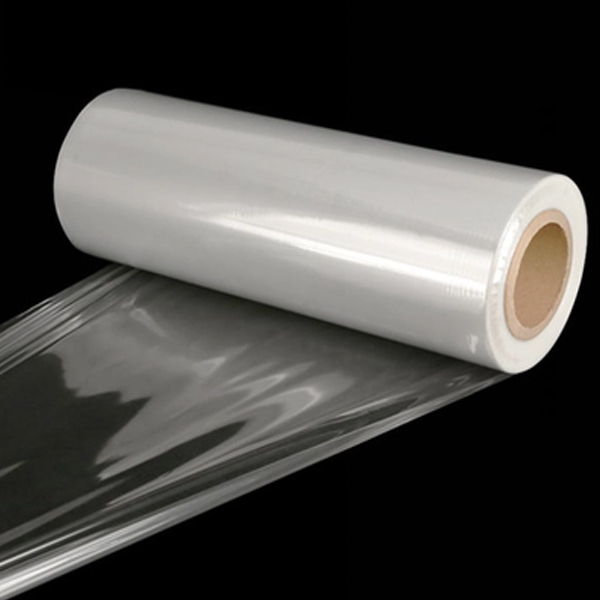
Polyolefin plastic wrap has become a preferred film in logistics packaging because it combines mechanical performance with processing flexibility. Unlike some traditional films, polyolefin offers high clarity, strong shrink properties, and good tear and puncture resistance—features that directly address common logistics challenges such as pallet stability, product protection, and warehouse handling. For companies focused on reducing damage, improving load integrity, and maintaining a clean presentation during transport, polyolefin provides a practical balance between performance and cost.
Load stability and shrink performance
One of the core advantages of polyolefin wrap in logistics is its shrinkability. When heated in a shrink tunnel or when heat is applied locally, polyolefin films contract uniformly around irregular shapes, locking items tightly to pallets or trays. This shrink action reduces movement during transit, minimizes load shift, and helps prevent toppling in mixed-commodity shipments. Because shrink is controlled by film formulation and processing parameters, logistics engineers can specify degrees of shrink to match fragile, dense, or oddly shaped loads.
Puncture, tear resistance, and protective qualities
Polyolefin films typically deliver superior puncture and tear resistance compared with many thin, non-reinforced films. This makes them effective at protecting sharp-edged products, metal parts, and goods with protrusions. The film's ability to absorb localized stress without catastrophic tearing reduces the risk of exposure to moisture, dirt, or contaminants. Many formulations also include enhanced abrasion resistance and low-permeability liners that help maintain product integrity during cross-docking, containerization, and long-haul shipping.
Clarity, presentation, and branding opportunities
High optical clarity is another practical benefit of polyolefin wrap. Clear film allows warehouse personnel, customs inspectors, and retail staff to visually identify packaged goods without removing packaging, saving handling time and reducing the need for additional labeling. For marketing and distribution, printable polyolefin options enable branding directly on the film, enabling promotional messaging or handling instructions to be visible from the pallet level without sacrificing mechanical performance.
Compatibility with automatic packaging lines
Most modern logistics operations rely on automated or semi-automated packaging machinery. Polyolefin wrap is engineered to be compatible with shrink tunnels, L-sealers, and automatic wrapping machines, ensuring consistent results at high line speeds. The film’s predictable shrink and sealing profile reduces machine adjustments and downtime. For high-throughput facilities, that translate to faster cycle times, reduced labor costs, and fewer rejected packages due to poor shrink or seal performance.
Environmental and regulatory considerations
Today’s logistics managers are tasked with balancing protection with sustainability. Polyolefin films are often recyclable through standard polyethylene streams or industrial recycling programs, and many manufacturers offer formulations containing post-consumer or post-industrial recycled content. Additionally, low-odor and low-VOC polyolefin grades meet stricter indoor air quality and food-contact regulations, which is important when packaging sensitive goods. Choosing certified films (e.g., food contact or specific environmental certifications) helps meet regulatory requirements and corporate sustainability goals.
Cost efficiency and total landed cost impact
Although the raw price per roll of polyolefin wrap can be higher than some basic films, its functional advantages often reduce total landed cost. Improved load stability lowers product damage rates and claims; better machine compatibility reduces labor and cycle times; and the ability to use thinner gauges without sacrificing strength reduces film consumption overall. When evaluated over the full logistics chain, polyolefin often delivers net savings through fewer product losses and higher throughput.
Selection guide: matching film to logistics needs
Selecting the right polyolefin grade involves matching film gauge, seal strength, shrink rate, and additives to the specific application. Consider whether the load is fragile, heavy, or temperature-sensitive; whether machinery uses heat tunnels or only light heat; and whether the supply chain requires printable or anti-static properties. The table below summarizes common film types, their practical advantages, and typical logistics use cases to help procurement teams make informed choices.
| Film Type | Key Advantages | Typical Use |
| Low-gauge polyolefin | Lower material cost, decent clarity | High-volume pallet wrapping |
| High-shrink polyolefin | Tight conforming shrink, superior load stability | Irregular loads and mixed-product pallets |
| Anti-static polyolefin | Protects electronics from static discharge | Electronics and precision components |
| Printable polyolefin | Branding and handling instructions on film | Retail distribution and export pallets |
Best practices for implementation and testing
To maximize benefits, conduct pilot tests under real operational conditions. Measure shrink ratio, seal integrity, puncture resistance, and film consumption per pallet. Train machine operators on heat profiling to avoid under- or over-shrink scenarios. Maintain inventory of spare film rolls and monitor supplier quality through batch testing. Periodic audits of packaging outcomes—claims, rework, and throughput—help quantify the ROI of switching to or optimizing polyolefin usage.
Concluding practical recommendation
Polyolefin plastic wrap offers logistics teams practical advantages across protection, presentation, machine compatibility, and sustainability. By choosing the right grade, conducting targeted trials, and aligning use with packaging machinery, organizations can reduce damage, speed up operations, and lower overall logistics costs. For procurement and operations teams, polyolefin is a versatile solution worth evaluating as part of a modern, efficiency-driven packaging strategy.
Recommended Products
Contact Us
Want To Know More?

- E-mail: [email protected]
- Phone: +86-18761594570 ( Miss. Jenny Chen )
- WhatsApp: +86-18761594570
- Address : No. 58-2, Panlongshan Road, Shanguan Town, Jiangyin City, Jiangsu Province, China
Product Categories
Follow Us
Copyright © 2025 by Jiangyin Guanghong Packing Materials Co., Ltd. Rights Reserved.
 POF Shrink Film Manufacturers