


 English
 Español
Looking forward to your message
Our factory was established in 2006
-
 Mobile/Whats app/Wechat: +86-18761594570 ( Miss. Jenny Chen )
-
 E-mail: [email protected]
POF Plastic Film: What It Is, Uses & How to Choose It
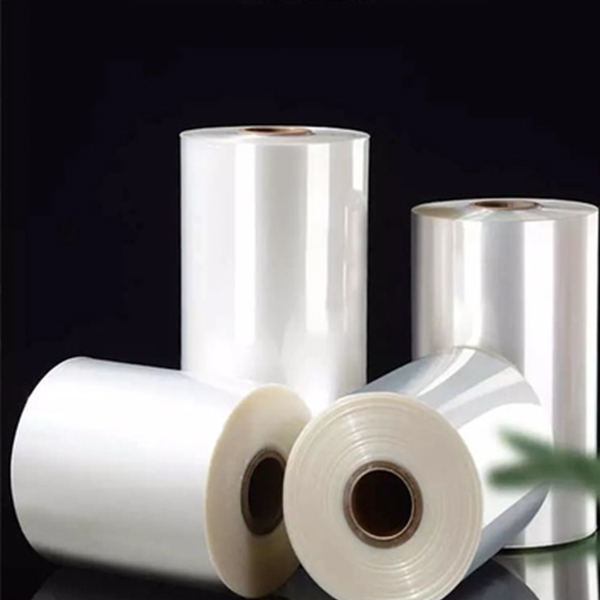
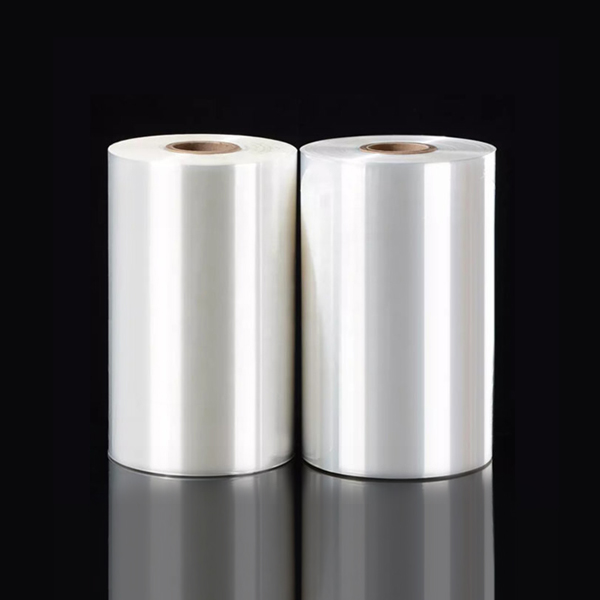
POF plastic film — polyolefin shrink film — is the dominant material used in heat-shrink packaging across food, consumer goods, and industrial applications worldwide. It is a cross-linked, multi-layer polyolefin film that shrinks tightly and uniformly around a product when exposed to heat, producing a clear, glossy, tamper-evident wrap that is both stronger and safer than the PVC film it has largely replaced. If you are selecting shrink film for a packaging operation, trying to understand material differences, or troubleshooting seal or shrink quality issues, this guide provides the technical detail you need to make informed decisions.
Content
- 1 What POF Plastic Film Is and How It Is Made
- 2 POF Film vs. PVC and PE Shrink Film: Key Differences
- 3 Primary Applications of POF Plastic Film
- 4 Types of POF Film and Choosing the Right Grade
- 5 POF Film Performance Specifications Explained
- 6 Packaging Equipment Compatibility with POF Film
- 7 Common POF Film Problems and How to Resolve Them
- 8 Storage, Handling, and Environmental Considerations
What POF Plastic Film Is and How It Is Made
POF stands for polyolefin film, and in the context of shrink packaging it specifically refers to a co-extruded, biaxially oriented film made from polyolefin resins — primarily polyethylene (PE) and polypropylene (PP) blends. The film is produced by melting resin, extruding it into a tube or flat sheet, and then stretching it in both the machine direction and transverse direction simultaneously while it is still warm. This biaxial orientation introduces molecular stress into the film that is released as shrinkage when the film is reheated during packaging.
Most commercial POF films use a three-layer or five-layer co-extrusion structure. The outer layers are typically PP-based for surface hardness, clarity, and seal compatibility, while the inner layer or layers are PE-based for flexibility, toughness, and cross-linking response. Cross-linking — achieved by irradiating the film with an electron beam — significantly increases tensile strength, puncture resistance, and seal integrity, particularly important for packaging products with sharp corners or irregular shapes.
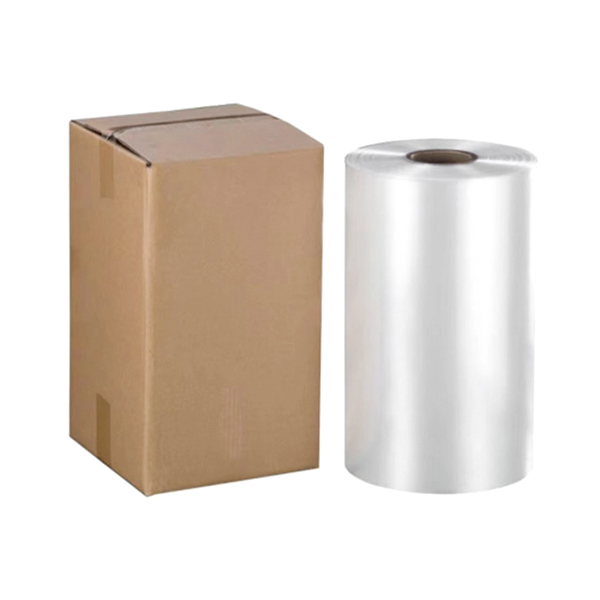
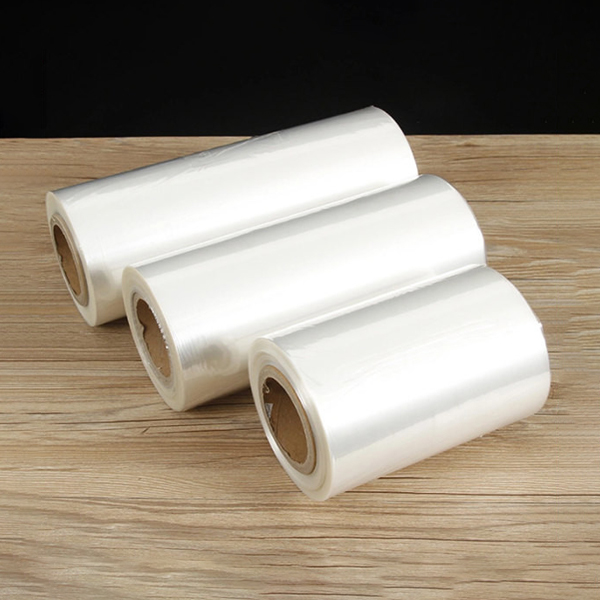
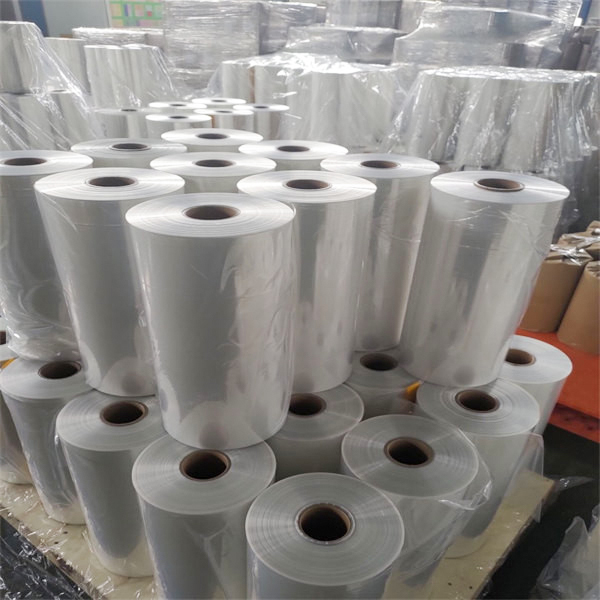
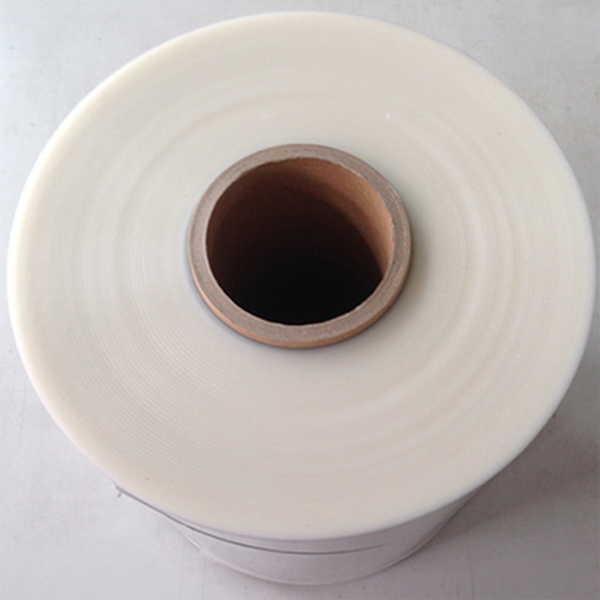
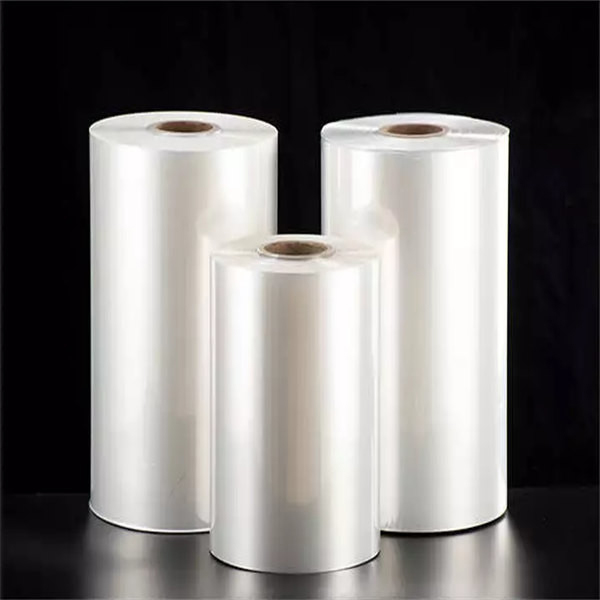
Standard POF film thicknesses range from 12 microns to 25 microns for most consumer packaging applications, with heavy-duty versions available up to 40 microns for industrial bundling and heavier products. Roll widths typically range from 100mm to 600mm for centrefold film used on L-bar sealers, and up to 1,500mm for flat film used in automatic sleeve wrapping lines.
POF Film vs. PVC and PE Shrink Film: Key Differences
POF film is frequently compared against PVC (polyvinyl chloride) shrink film and PE (polyethylene) shrink film. Each has distinct properties that make it more or less suitable for specific applications.
| Property | POF Film | PVC Film | PE Film |
|---|---|---|---|
| Clarity | Excellent | Good | Moderate (hazy) |
| Shrink ratio | Up to 75% (biaxial) | 40–60% | 15–40% |
| Food contact safe | Yes (FDA / EU compliant) | Restricted | Yes |
| Seal strength | High | Moderate | Moderate–High |
| Burn / fume safety | Clean burn, no HCl | Releases HCl fumes | Clean burn |
| Puncture resistance | Excellent (cross-linked) | Low–Moderate | Good |
| Cost per kg | Moderate–High | Low | Low–Moderate |
The shift away from PVC toward POF film has accelerated significantly since the early 2000s. PVC shrink film releases hydrochloric acid (HCl) fumes when sealed or incinerated, creating workplace air quality issues and environmental disposal problems. Many food retailers and brand owners now specify POF film exclusively, and several European countries have introduced restrictions on PVC packaging in food-contact applications. POF film's superior clarity, flexibility, and safety profile have made it the default choice for most retail shrink packaging despite its higher per-kilogram cost.
Primary Applications of POF Plastic Film
POF film's combination of optical clarity, high shrink ratio, and food-safe compliance makes it suitable across a wide range of packaging formats and product categories.
Food and Beverage Packaging
POF film is extensively used for wrapping fresh produce, baked goods, confectionery, ready meals, and multipack bundles of bottles or cans. Its FDA and EU food contact compliance (under EU Regulation 10/2011) means it can be applied directly to food products. The film's excellent clarity keeps the product visible through the wrap — critical for fresh food retail presentation. In fresh bakery and produce applications, micro-perforated POF film is used to allow moisture vapour transmission and prevent condensation inside the pack without compromising the tight shrink wrap appearance.
Consumer Goods and Retail Products
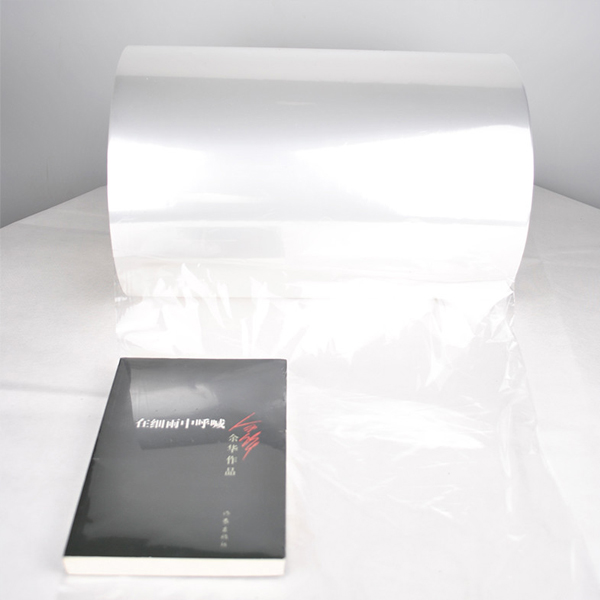
Books, DVDs, software boxes, cosmetics, toys, and stationery are commonly shrink-wrapped in POF film for retail presentation, tamper evidence, and dust protection. The high gloss of POF film enhances shelf appeal significantly compared to PE film. POF's ability to shrink tightly around sharp-cornered rectangular boxes — without tearing at corners due to its cross-linked structure — makes it the preferred choice for these applications over non-cross-linked alternatives.
Pharmaceutical and Medical Packaging
Outer packaging of pharmaceutical product boxes is frequently wrapped in POF film for tamper evidence and protection during distribution. The film must meet specific regulatory requirements in this sector — including compliance with USP standards in North America and relevant EU directives — and must not interact chemically with the primary packaging underneath. Antistatic POF grades are available for electronics and medical device packaging where electrostatic discharge is a concern.
Industrial Bundling and Unitising
Heavier gauge POF film (19–40 microns) is used to bundle groups of products together — multipacks of bottled water, beverage cans, or hardware items — replacing corrugated trays or cardboard sleeves in some applications. The transparency of the bundle wrap allows product identification without opening, and the tight wrap provides structural integrity for palletised transport.
Types of POF Film and Choosing the Right Grade
Not all POF films are interchangeable. The correct grade depends on the product being wrapped, the packaging equipment being used, and the required performance characteristics.
Standard POF vs. Cross-Linked POF
Standard (non-irradiated) POF film is less expensive and suitable for simple, flat-surface products without sharp corners. Cross-linked POF film — produced by electron beam irradiation after extrusion — has significantly higher tensile strength, puncture resistance, and seal integrity. Cross-linked POF is the appropriate choice for products with sharp edges, heavy weights, or irregular shapes, and for high-speed automated lines where seal consistency under mechanical stress is critical.
Centrefold vs. Single-Wound Film
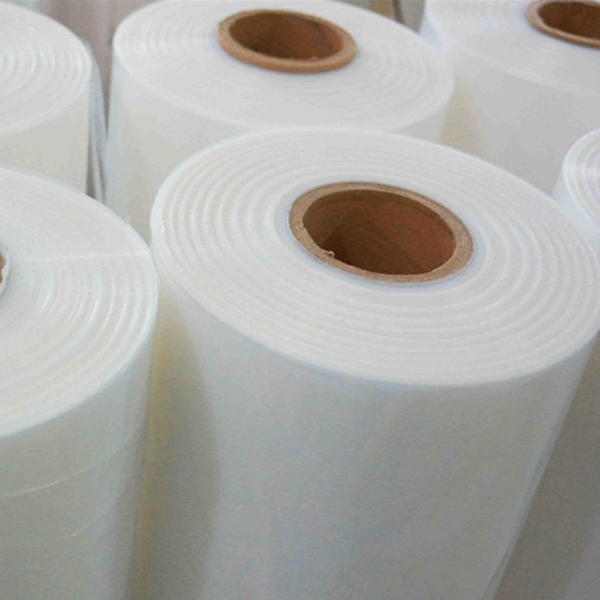
Centrefold POF film is folded along its length during winding, producing a roll with two layers. This format is used on L-bar sealer machines, where the product is placed on the folded film and three seals are made — two on the L-bar and one as the product pushes through the film fold. Single-wound (flat) film is used on sleeve wrappers and automatic flow-wrap machines that form the film into a tube around the product inline.
Micro-Perforated POF
Micro-perforated POF film is laser or needle-punched with tiny holes — typically 0.3mm to 1.0mm in diameter at densities of 36 to 144 holes per square inch — to create controlled breathability. This prevents moisture accumulation inside the wrap for fresh food products while maintaining the appearance of a sealed package. The perforation pattern can be customised for specific moisture transmission requirements.
Antistatic POF Film
Standard POF film generates static charge during unwinding and sealing, which can attract dust and cause handling problems. Antistatic grades incorporate surface coatings or additive compounds that dissipate static charge. These are specifically required for electronics packaging and are recommended for clean-room environments or any application where dust attraction is problematic.
POF Film Performance Specifications Explained
Understanding the key technical parameters on a POF film data sheet helps ensure the material will perform correctly on your equipment and for your product.
- Shrink percentage (MD and TD): The percentage reduction in each direction when the film is exposed to a defined temperature (typically measured at 120°C and 160°C in a glycerine bath). Balanced shrink films have similar MD (machine direction) and TD (transverse direction) values, producing a uniform wrap. Unbalanced films shrink more in one direction and are used for specific wrap geometries.
- Shrink force: The tension the film exerts on the product as it shrinks. High shrink force can crush soft products like fresh bread. Lower shrink force grades are available for delicate packaging applications.
- Seal initiation temperature: The minimum temperature at which a reliable seal forms. Most POF films seal at 120°C to 160°C — significantly lower than the 170–200°C required for PE film — which reduces energy consumption and widens the sealing window on packaging equipment.
- Haze value: Optical clarity is measured as haze percentage. Premium POF films achieve haze values below 2%, providing near-invisible wrapping that maximises product visibility. Standard grades typically range from 2–5% haze.
- Coefficient of friction (COF): Affects how the film feeds through packaging machinery and stacks after wrapping. Low COF films feed more smoothly but may stack and slide unpredictably. COF can be adjusted through surface additives and is specified separately for inner (film-to-film) and outer (film-to-surface) faces.
Packaging Equipment Compatibility with POF Film
POF film is compatible with the three main categories of shrink packaging equipment, but the correct film specification differs for each.
L-Bar Sealers with Shrink Tunnel
The most common semi-automatic configuration for small to medium production volumes. The L-bar sealer uses centrefold POF film and makes the two seals simultaneously with a heated L-shaped wire or blade. The wrapped product then passes through a hot air tunnel — typically set at 120°C to 180°C for POF film — that activates shrinkage. POF's lower sealing temperature and wider sealing window make it more forgiving on L-bar machines than PVC film, reducing the frequency of burn-through on thin gauge products.
Sleeve Wrappers
Sleeve wrappers form a sleeve of single-wound POF film around the product and make one transverse seal, leaving the ends open. The product then enters a shrink tunnel where the open ends shrink and seal around the product. This is the preferred format for multipack bundling of bottles and cans. Sleeve wrappers run at higher speeds than L-bar sealers — typically 20 to 60 packs per minute — and require film with consistent thickness and good tracking properties.
Automatic Flow-Wrap and Overwrap Machines
High-speed automatic lines for retail food and consumer goods use inline flow-wrap machines that form, fill, and seal at speeds of 60 to 200+ packs per minute. These machines require POF film with tight thickness tolerance (typically ±1 micron), consistent COF, and reliable seal initiation across a narrow temperature window. Film splice management is critical at these speeds — most automated lines use auto-splicers and can handle roll diameter changes without stopping production.
Common POF Film Problems and How to Resolve Them
Most POF film packaging problems are caused by incorrect equipment settings, improper film storage, or mismatched film specification rather than defective film itself.
- Burn-through or holes in the seal area: Sealing temperature too high or dwell time too long. Reduce sealing temperature in 5°C increments. Check that the seal bar or wire is clean and free from film residue, which causes localised hot spots.
- Weak or peeling seals: Temperature too low or sealing pressure insufficient. Verify that both seal bar faces are making even contact. Film stored in cold or humid conditions may require a short warm-up period before running to reach optimal sealing performance.
- Dog-ears or uneven shrink at corners: Tunnel temperature too low or conveyor speed too fast, not allowing enough dwell time in the heat zone. Increase tunnel temperature or reduce conveyor speed. Ensure hot air is directed evenly across the full width of the tunnel.
- Film tracking off-centre on the machine: Roll mounted with uneven tension, or film core not seated squarely on the mandrel. Re-seat the roll and check that the film unwinds with consistent tension across its width.
- Hazy or milky appearance after shrinking: Tunnel temperature too high, causing the film surface to overheat and lose optical clarity. Reduce temperature and increase line speed slightly. Some haze in the first few packs of a cold start is normal and clears as the tunnel reaches operating temperature.
Storage, Handling, and Environmental Considerations
Correct storage of POF film directly affects its running performance. Film should be stored in its original packaging in a clean, dry environment at temperatures between 15°C and 25°C, away from direct sunlight and heat sources. Storing film in cold warehouses (below 10°C) stiffens the film and can cause blocking between layers and poor tracking on equipment during the first hour of production after a cold start.
From a sustainability standpoint, POF film is technically recyclable within polyolefin plastic recycling streams (recycling code 4 for LDPE-dominant formulations), but in practice it is rarely collected for recycling due to contamination from food residues and the mixed resin composition of multi-layer co-extruded films. Several manufacturers are developing mono-material POF structures with improved recyclability, and some brands are trialling compostable shrink film alternatives for lower-barrier applications, though these remain a small fraction of total shrink film use globally.
Recommended Products
Contact Us
Want To Know More?

- E-mail: [email protected]
- Phone: +86-18761594570 ( Miss. Jenny Chen )
- WhatsApp: +86-18761594570
- Address : No. 58-2, Panlongshan Road, Shanguan Town, Jiangyin City, Jiangsu Province, China
Product Categories
Follow Us
Copyright © 2025 by Jiangyin Guanghong Packing Materials Co., Ltd. Rights Reserved.
 POF Shrink Film Manufacturers