


 English
 Español
Looking forward to your message
Our factory was established in 2006
-
 Mobile/Whats app/Wechat: +86-18761594570 ( Miss. Jenny Chen )
-
 E-mail: [email protected]
POF Shrink Film Guide: Benefits, Specs & Packaging Tips
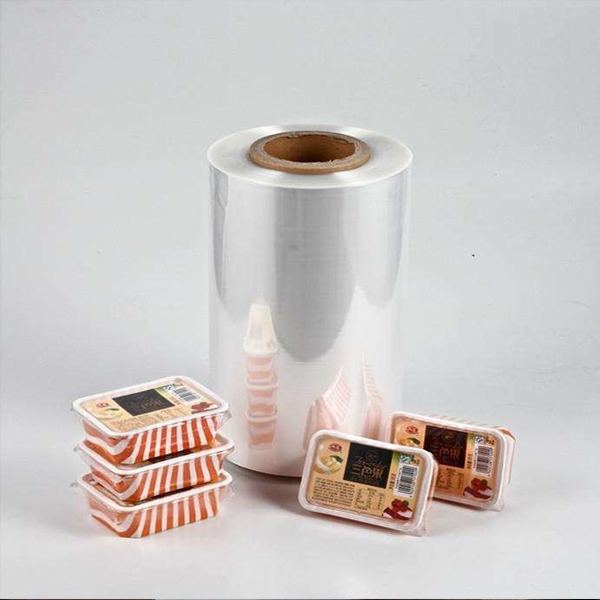
POF (Polyolefin) shrink film has become the industry standard for retail packaging due to its superior clarity, durability, and environmental profile. Unlike traditional PVC films, POF offers higher tensile strength and shrinks at lower temperatures, reducing energy costs and minimizing the risk of product damage. For businesses aiming to enhance shelf appeal while meeting sustainability goals, switching to multi-layer co-extruded POF film provides a robust, high-gloss solution that performs reliably on both manual and automated L-bar sealers and shrink tunnels.
Content
Why POF Outperforms PVC and PE Alternatives
While Polyvinyl Chloride (PVC) was once the dominant material for shrink wrapping, regulatory pressures and performance limitations have shifted the market toward Polyolefin (POF). Understanding the technical differences helps in selecting the right film for specific applications.
Clarity and Gloss Metrics
Visual appeal is critical in retail environments. POF film typically offers a gloss level of over 90% and haze values below 3%, providing a crystal-clear window to the product. In contrast, standard Polyethylene (PE) shrink film often appears cloudy or milky, which can obscure product details. This optical superiority makes POF the preferred choice for cosmetics, electronics, and food items where presentation drives sales.
Strength and Puncture Resistance
POF films are manufactured using a multi-layer co-extrusion process, typically consisting of five layers (e.g., PE/Adhesive/EVA/Adhesive/PE). This structure results in exceptional toughness. POF film can withstand up to 30% more puncture force than equivalent gauge PVC films. This durability allows for thinner gauges (down to 12 microns) without compromising package integrity, leading to material cost savings and reduced waste.
| Property | POF (Polyolefin) | PVC (Polyvinyl Chloride) | PE (Polyethylene) |
|---|---|---|---|
| Clarity | Excellent | Good | Poor/Cloudy |
| Shrink Temperature | Low (120-150°C) | Medium (140-180°C) | High (160-200°C) |
| Environmental Impact | Non-toxic, Recyclable | Releases Chlorine/HCl | Recyclable but bulky |
| Seal Strength | Very High | Moderate | High |
Technical Specifications and Gauge Selection
Selecting the correct film thickness (gauge) is crucial for balancing cost, protection, and machine compatibility. POF film is available in various gauges, typically ranging from 12 microns to 30 microns.
Guidelines for Gauge Choice
- 12-15 Microns: Ideal for lightweight, uniform products such as CD cases, small cosmetic boxes, or stationery. Offers high speed and low material cost but requires precise machine tuning.
- 19-20 Microns: The most versatile grade, suitable for medium-weight items like software boxes, toy packages, and multi-packs of beverages. Provides a good balance of strength and clarity.
- 25-30+ Microns: Designed for heavy, sharp-edged, or irregular items such as hardware tools, large book sets, or industrial parts. Resists punctures and absorbs significant shock during transit.
Shrink Ratio Considerations
Most standard POF films offer a free shrink ratio of approximately 50-60% in the machine direction (MD) and 40-50% in the transverse direction (TD). For products with complex geometries or deep draws, high-shrink POF variants (up to 75% shrink) are available. Using a film with insufficient shrink ratio for a contoured product will result in loose "dog ears" or poor fit, while excessive shrink can distort delicate packaging.
Optimizing Machine Settings for POF Film
Even high-quality POF film will perform poorly if machine parameters are not adjusted correctly. Proper calibration ensures tight, wrinkle-free packages and extends the life of sealing elements.
Temperature Control
POF seals effectively at lower temperatures than PVC. Set the sealer wire temperature between 130°C and 160°C. Excessive heat causes the film to become brittle, leading to seal fractures or burn-throughs. In the shrink tunnel, maintain air temperature between 120°C and 150°C. Because POF is sensitive to heat, use variable speed fans to distribute hot air evenly, preventing localized overheating that can cause holes.
Dwell Time and Conveyor Speed
The dwell time (contact time of the sealer bar) should be adjusted to create a strong bond without thinning the seal area excessively. For automatic L-bar sealers, a dwell time of 0.5 to 1.5 seconds is typical. Conveyor speed through the shrink tunnel must match the film's shrink rate; too fast, and the film won't fully conform; too slow, and the film may over-shrink or melt. Start at a moderate speed and adjust incrementally based on visual inspection of the output.
Perforation Requirements
Unlike PVC, which is permeable to air, POF is an excellent barrier. When shrinking tightly around a product, trapped air can cause ballooning or burst seams. Use perforated POF film for products with flat surfaces or trapped air pockets. Micro-perforations allow air to escape during the shrinking process while maintaining the film's structural integrity and moisture barrier properties.
Sustainability and Regulatory Compliance
As global regulations tighten on single-use plastics, POF film offers a compliant and environmentally responsible alternative to older materials.
Non-Toxic Composition
POF film is free from chlorine, meaning it does not release hydrochloric acid or dioxins when incinerated. This makes it safer for workers during production and disposal. It is FDA-compliant for direct food contact, making it suitable for wrapping produce, bakery items, and frozen goods without the risk of chemical migration associated with plasticizers in PVC.
Recyclability and Waste Reduction
POF is classified as #7 Other plastic but is increasingly accepted in specialized recycling streams. More importantly, its high strength allows for downgauging—using thinner film to achieve the same performance as thicker PVC. This reduces plastic usage by weight by up to 25-30%, lowering both material costs and the carbon footprint of shipping. Many manufacturers now offer bio-based POF options derived from renewable resources, further enhancing the sustainability profile for eco-conscious brands.
Recommended Products
Contact Us
Want To Know More?

- E-mail: [email protected]
- Phone: +86-18761594570 ( Miss. Jenny Chen )
- WhatsApp: +86-18761594570
- Address : No. 58-2, Panlongshan Road, Shanguan Town, Jiangyin City, Jiangsu Province, China
Product Categories
Follow Us
Copyright © 2025 by Jiangyin Guanghong Packing Materials Co., Ltd. Rights Reserved.
 POF Shrink Film Manufacturers